Chair Cardio
Seated March Warm-Up
A five-minute seated march that wakes up your hips and gets blood moving before anything harder.
Gentle startGentle effort
Start this routineChair-based and standing routines designed for adults over 60. Short sessions, a modification for every single move, and progress that celebrates rest days instead of punishing them.
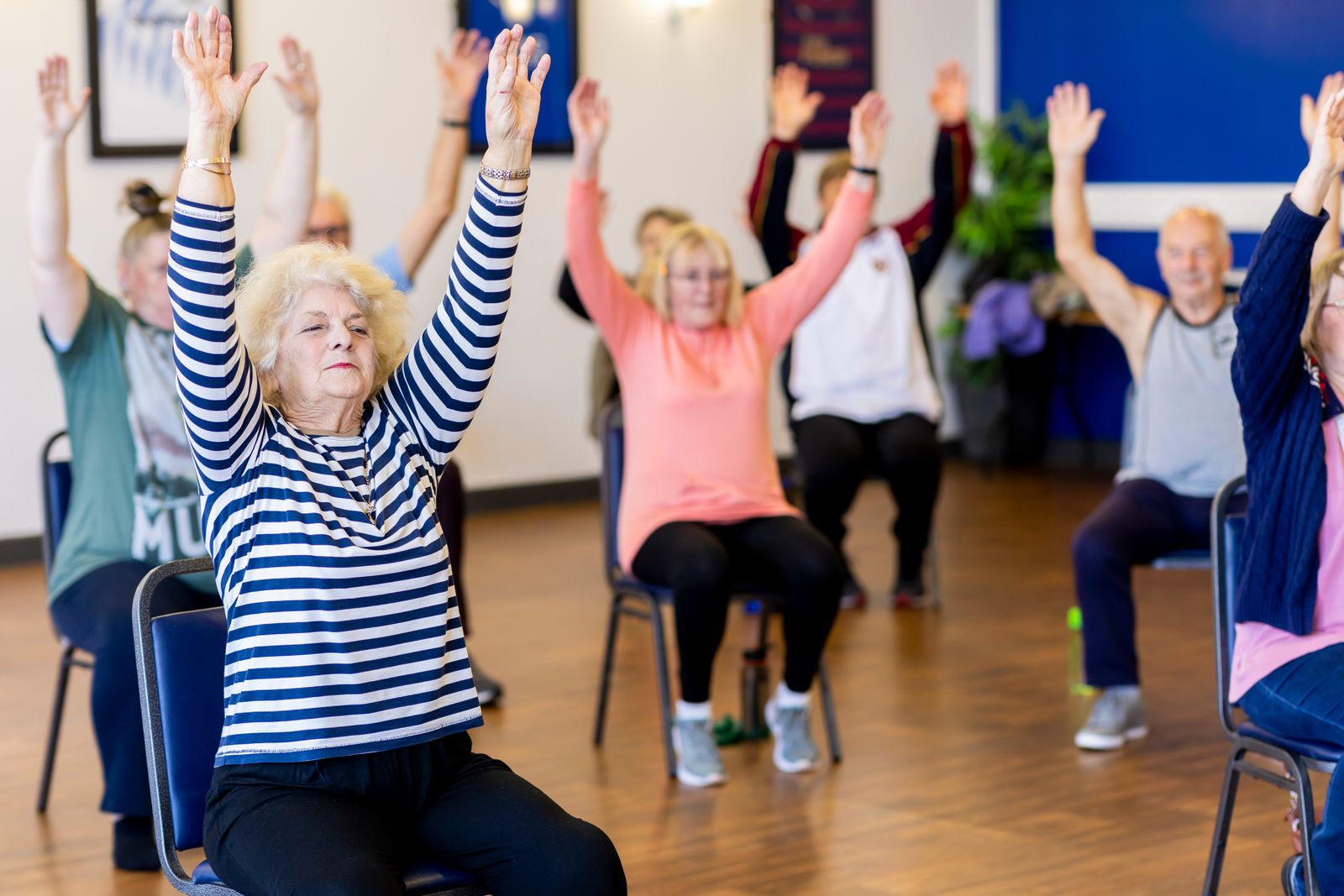
Three short sessions a week is enough to build real leg strength within six weeks.
Why it works
Every routine lists a modification for each movement, from a smaller range to a fully seated version. Nothing is all-or-nothing.
One tap switches the whole app to large text and high contrast. Not a font slider — the layout, spacing and buttons change with you.
Share your progress with the people who care, choose exactly what they see, and take it back whenever you like.
No leaderboards, no red crosses, no guilt. Rest days are part of the plan, and your streak pauses instead of resetting.
For most people, yes — as long as you progress the effort. Seated marching and leg extensions with a slow three-second hold load your thigh muscles enough to build strength, and repeated chair rises train the exact movement that keeps you independent.
Where chair work alone falls short is balance. Balance improves when you practise standing on a narrowing base of support — that is why our Balance & Fall Prevention routines are done upright, with a counter always within reach. Pair two seated strength sessions a week with two short balance sessions and you have covered both.
Start here
Chair Cardio
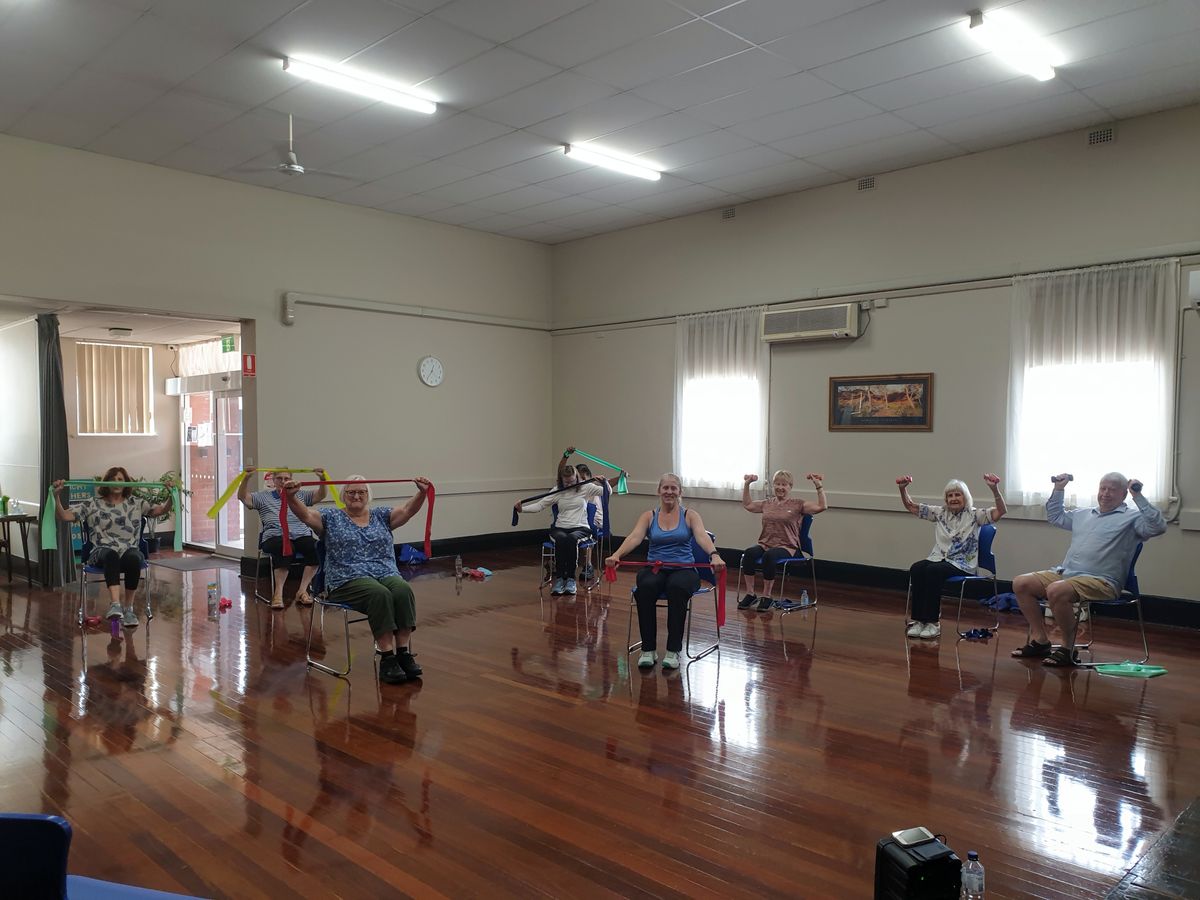
A five-minute seated march that wakes up your hips and gets blood moving before anything harder.
Balance & Fall Prevention
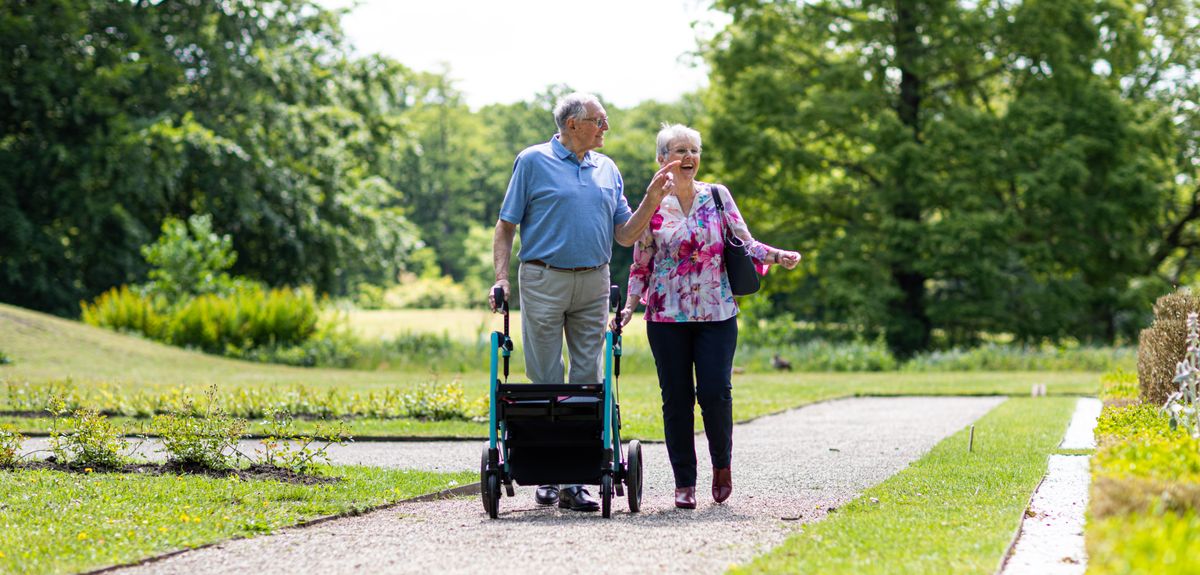
The single most useful movement for staying independent — practised safely, ten times over.
Seated Strength
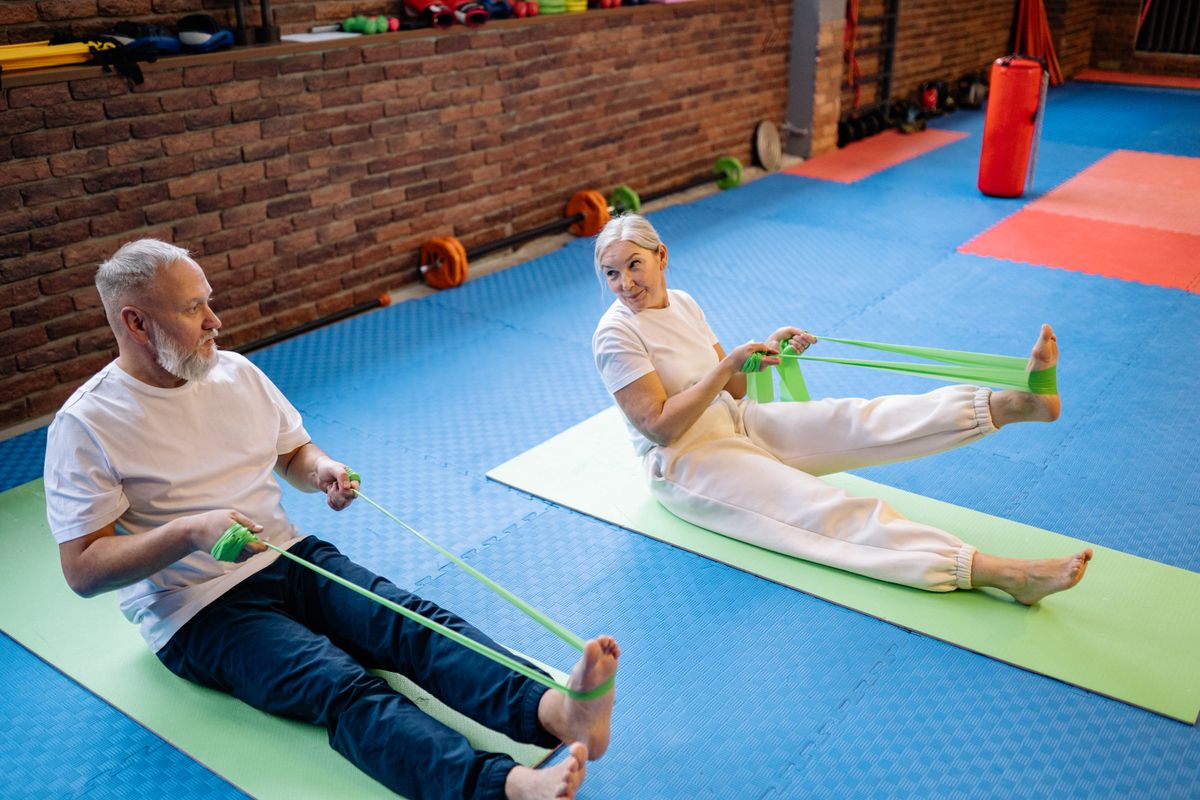
Fifteen minutes with a light resistance band to strengthen arms, shoulders and upper back.
Choosing your style
| What matters | Chair routines | Standing low-impact | Water exercise | Walking |
|---|---|---|---|---|
| Balance improvement | Moderate — build the strength first | Strong — directly trains steadiness | Moderate | Moderate |
| Fall risk reduction | Good when combined with standing work | Best evidence for reducing falls | Limited evidence | Good, especially outdoors |
| Joint stress | Very low | Low with no jumping | Lowest of all | Moderate on hard surfaces |
| Strength gained | Good with resistance or repeated rises | Strong, uses full bodyweight | Moderate | Minimal for upper body |
| Best if you have knee pain | Excellent starting point | Good with a supported wall or counter | Excellent | Short flat walks only |
| Equipment needed | A firm chair | A counter or wall | Pool access | Supportive shoes |
| Can be done at home | Yes, entirely | Yes, entirely | No | Yes, indoors or out |
Create a private link, choose exactly what your family can see, and take it back whenever you like. They can send you a short note of encouragement — and nothing else. No accounts for them to make, no passwords to forget.
Common questions
Yes, for most people it is a genuinely effective start. Seated leg extensions, chair rises and resistance band work load your muscles enough to build strength, and research on older adults shows meaningful gains from seated programmes. Chair exercise is also the safest way to begin if your balance is uncertain. Ideally you add some standing work over time.
Aim for strength work twice a week and balance practice two to three times a week, with light movement most days. Short sessions of ten minutes count. Three ten-minute sessions on different days give you the same benefit as one thirty-minute session.
The strongest evidence is for balance and strength training combined: standing on one leg while supported, heel-to-toe walking, sit-to-stand practice and hip strengthening. These train the exact reactions that stop a stumble turning into a fall. Practice two or three times a week for the best effect.
Yes. For osteoarthritis of the knee and hip, gentle strength and mobility work reduces pain and improves function. Movement keeps joint fluid circulating and muscles strong around the joint. Work in a comfortable range, expect some stiffness at the start of a session, and stop if pain rises sharply or lingers the next day.
You are working at the right level when you can talk in short sentences but not sing. Mild muscle fatigue afterwards is normal. Warning signs to stop are chest pain or pressure, dizziness, unusual breathlessness, a headache, or joint pain that lasts more than two days.
Absolutely. Muscle responds to training at every age, and some of the largest relative gains in strength have been measured in people over 85. Start with seated routines, keep sessions short, and build up gradually over weeks rather than days.
No. A firm chair with a solid seat and a clear bit of floor are enough for most of the library. A light resistance band and two small weights or water bottles add variety. If a chair might slide, put its back against a wall.
Talk to your doctor first if you have a heart condition, uncontrolled blood pressure, a recent fall, or a joint replacement. Then choose a five-minute seated routine, learn the movements slowly, and progress only when the whole session feels comfortable.
Pick a five-minute routine, put the kettle on, and move while it boils. That is how this starts for almost everyone.
Reviewed by Dana Whitfield, PT, DPT — licensed physical therapist specialising in older-adult rehabilitation.